Phonics Websites for Home: Choose the One That Matches Your Child's School
The right phonics website for home practice depends on the programme your child's school teaches. How to find out which one it is, where each programme's free parent pages are, and what we found when we checked each site.
GetYourTutors•Reviewed by the Academic Head
••
9 min read
The short answer
Use the free parent pages from the phonics programme your child's school uses. Programmes teach the sounds in different orders, and use different names, actions, pictures and letter shapes. A website from another programme can confuse a child who is just starting to read.
So ask the class teacher which programme the class uses, then use that programme's own parent pages. A few other websites can be used alongside any programme; they are listed further down, with what we found when we checked each one on 19 October 2026.
Why the programme matters
Every phonics programme teaches the same core skills: the sounds that letters stand for, blending sounds together to read a word, and splitting a word into its sounds to spell it. How they teach them differs.
England's Department for Education puts it plainly in its reading framework: programmes "use programme-specific systems and terminology such as actions, mnemonics, prompts, key words and routines", and "It is important not to confuse pupils by mixing material from different programmes". Its own example is one programme saying "split digraph" where another says "magic e" for the same spelling: the a and e that work together in "late".
At home this means one thing: if school teaches a sound with one picture, one action and one rhyme, a website that teaches the same sound with a different picture and rhyme gives your child two cues for one sound. For a child who is just starting, or who finds reading hard, one set of cues is the safer choice.
How to find out your school's programme
Look at the reading book that comes home. It may show the programme's name or logo on the cover.
Look at the school's website. Some schools name their phonics programme on a curriculum or early reading page.
Ask the class teacher. The question that gets the most useful answer:
"Which phonics programme does the class use, and is there a parent page or video that shows how you say the sounds?"
A good follow-up: "Which sounds is my child learning this week?"
England's Department for Education keeps a list of validated phonics programmes, meaning programmes it has checked against its criteria: 45 programmes, on a list last updated on 16 February 2026. Schools outside England, including British-curriculum and IB schools in the UAE and elsewhere, are not bound by that list and choose their own approach, so ask.
Each programme's own free parent pages
These are the free parent pages published by the programmes themselves, as we found them on 19 October 2026. "Free" means free when we checked; we do not quote prices, because they change and differ by country.
If your school uses Twinkl Phonics: the Twinkl parent page we checked was arranged by Letters and Sounds phases rather than Twinkl Phonics' own levels, and even its "Free Download" printables asked us to sign up, so ask the school what it shares with parents.
If your school's programme is not here, search for its name with "parents". Every programme in the table above publishes something free for parents, and a school that uses one can usually point you to it.
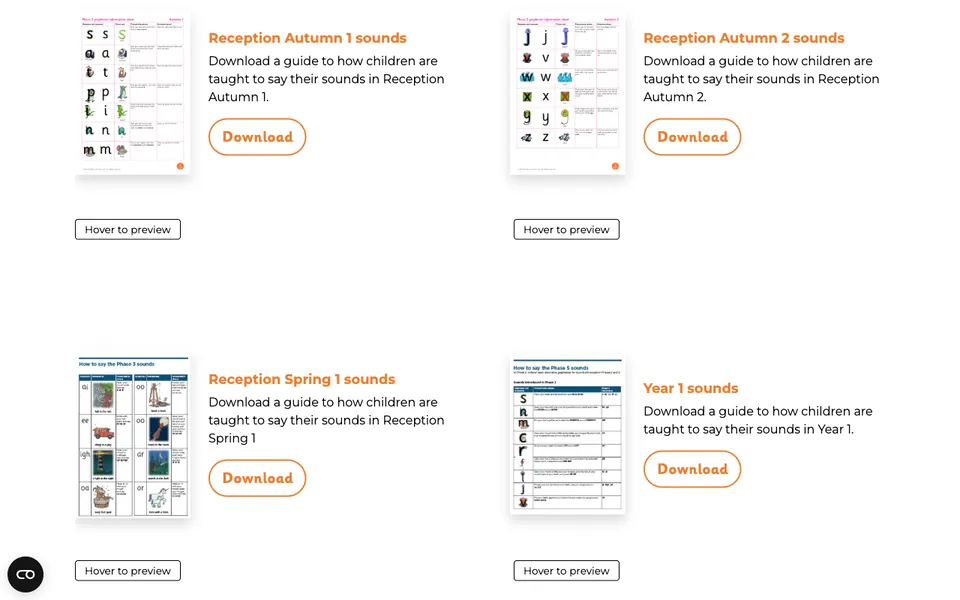
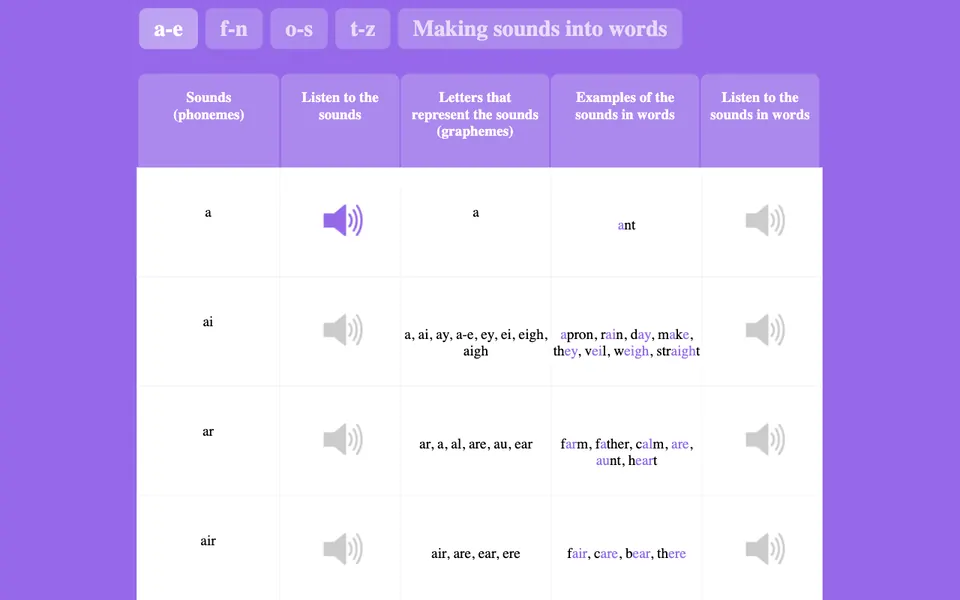
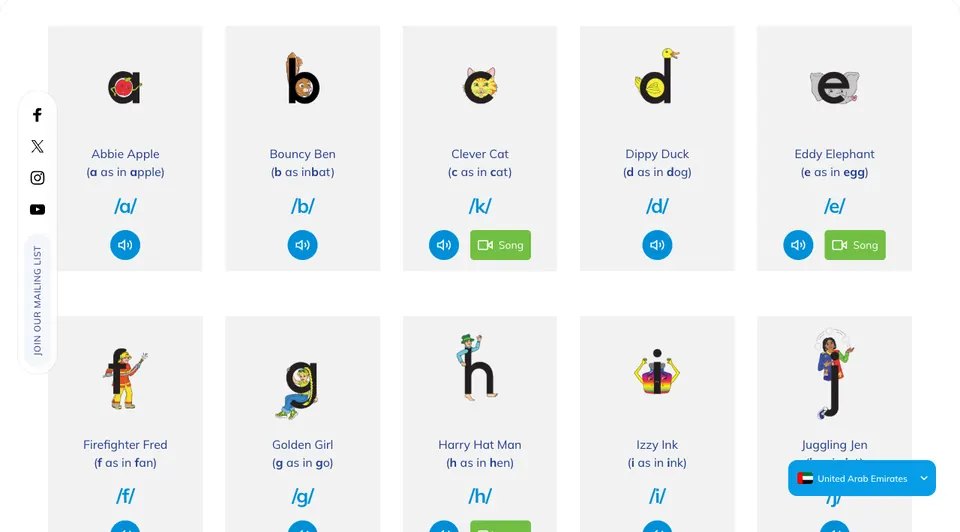
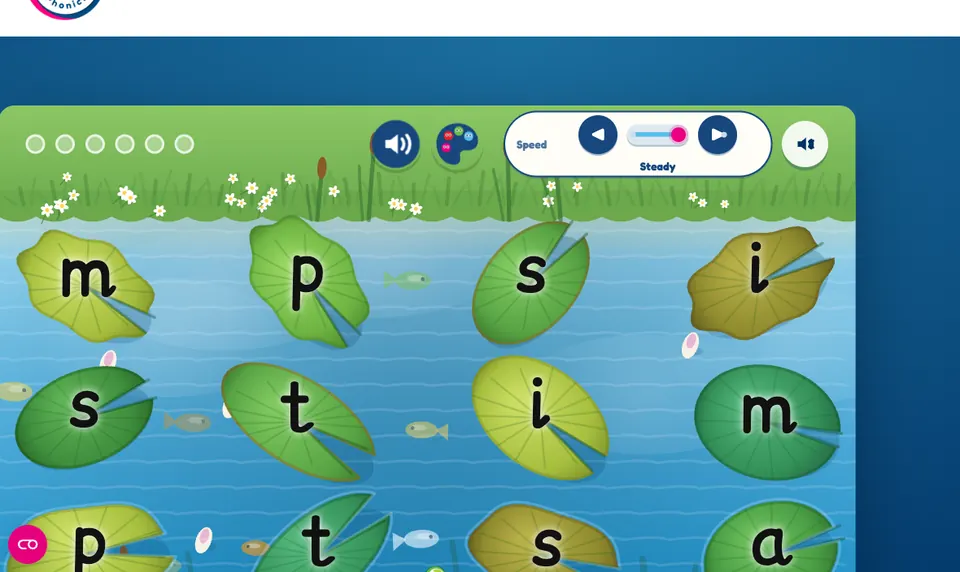
Screenshot of Little Wandle Letters and Sounds Revised, taken 19 October 2026.Screenshot of Oxford Owl for Home, taken 19 October 2026.Screenshot of Letterland, taken 19 October 2026.
Websites that work alongside any programme
These are not tied to your school's programme. Some say they work with whatever programme the school uses; others follow their own order of sounds. Use them for extra practice once you know which sounds your child has been taught, and check that they say the sounds the way your child hears them in class.
Oxford Owl for Home (Oxford University Press). Free phonics pages for parents and a sound chart where you can hear each sound, with no account. Its own words: "Each scheme teaches the sounds in a slightly different order and will use slightly different vocabulary for talking about phonics." The free eBook library needs a free account, and the site says the eBooks are not made for phones.
Teach Your Monster to Read (Teach Your Monster Ltd, part of the Usborne Foundation). A reading game in which, the site says, children create a monster and take it on an adventure. The site says it was "designed in collaboration with leading academics from Roehampton University" and "works with whatever phonics scheme is being used in school". It is free on a computer, but when we pressed "Play now for free" it asked us to log in or sign up before it would start, so we did not see the game itself. On phones and tablets it is a paid app.
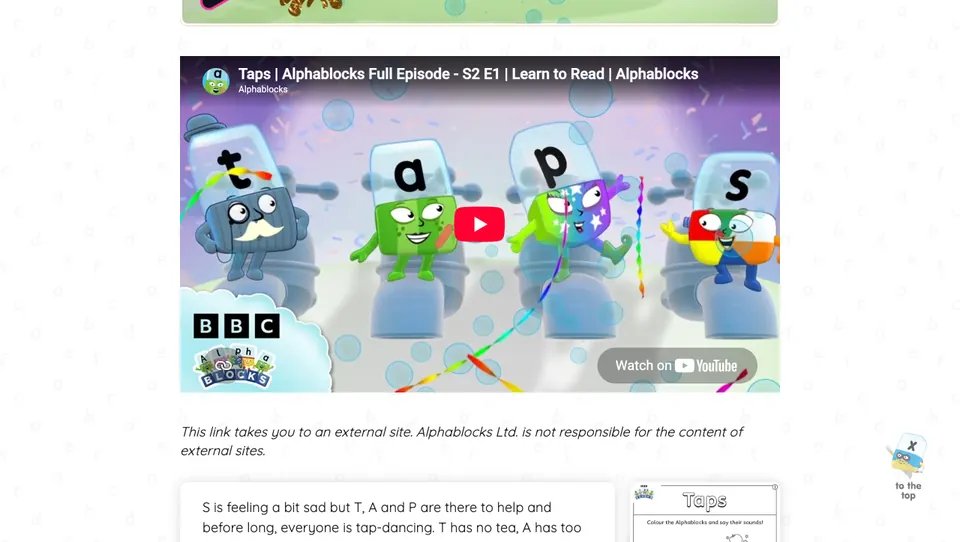
Alphablocks (Alphablocks Ltd). The cartoon series shown on CBeebies, in which letters say their sounds and join up to make words, in five levels from first sounds to long vowels. From the UAE, the BBC's own Alphablocks pages did not open (BBC iPlayer told us it is "only available in the UK"), but the episodes played free on the series' own website, through YouTube. A YouTube advert played before the episode. There are also free printable activities.
Screenshot of the Alphablocks website, taken 19 October 2026.
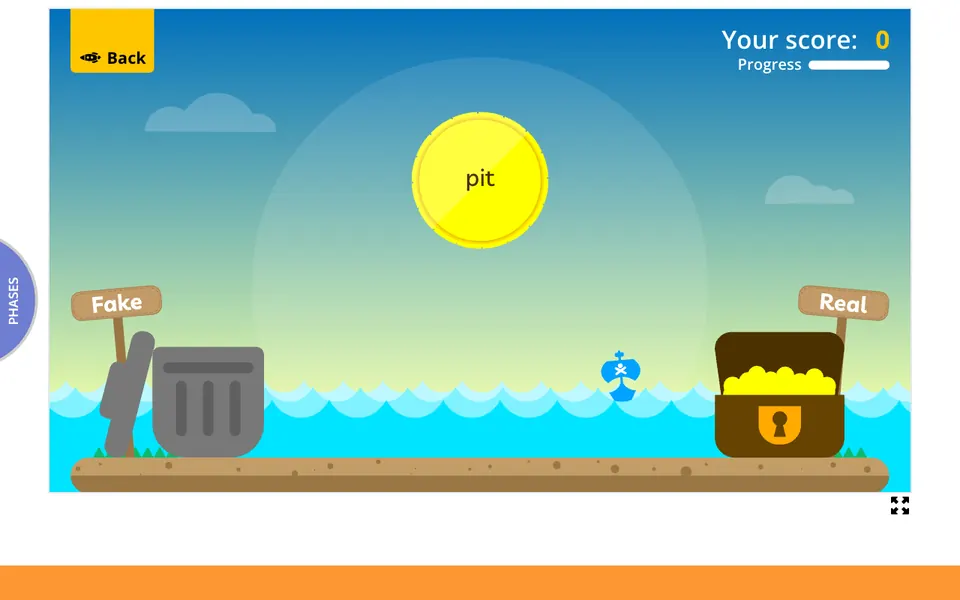
PhonicsPlay (PhonicsPlay Ltd). A large set of phonics games; about a dozen were free when we checked, and the rest need a subscription. The games are arranged by the phases and sets of Letters and Sounds (2007), for example "Set 1 (s a t p)". The free game we tried, Buried Treasure, used sound effects and music but did not say the sounds aloud.
Screenshot of PhonicsPlay, taken 19 October 2026.
Phonics Hero. A home phonics game with its own order of sounds. A few demo games are free on a computer with no account; the full game is a free trial, then a subscription. The site says you can choose "an English, American or Australian accent".
Reading Eggs (Blake eLearning / 3P Learning), which includes Fast Phonics. Its own lesson sequence. Six sample lesson parts are free with no account; the full programme is a free trial, then a subscription. From the UAE, readingeggs.com sent us to the UK site. We saw no adverts for other companies, but the site loaded an advertising tracking tag.
Screenshot of Reading Eggs, taken 19 October 2026.
What we found when we checked
We asked the same seven questions of every site, on 19 October 2026, from Dubai, in a computer browser and in a browser window set to a phone's screen size. We did not create accounts or start free trials: where a site needed one, we say so and stopped there. "Sales prompts" means the site's own buttons and pop-ups for its paid products; "adverts" means adverts for other companies.
Site
Programme
Free with no account?
On a phone-sized screen
Adverts or sales prompts we saw
Published by
Oxford Owl for Home
Any; pages for Read Write Inc. and Essential Letters and Sounds
Yes for the phonics pages; eBooks need a free account
Partly: the sound chart scrolls sideways; eBooks not made for phones
Own shop; no adverts
Oxford University Press
Ruth Miskin parent films
Read Write Inc. Phonics
Yes
Works
Own parent kits; no adverts
Ruth Miskin Literacy
Little Wandle for parents
Little Wandle
Yes
Page and guides work; videos not tested
None for parents; no adverts
Wandle Learning Trust
Jolly Songs
Jolly Phonics
Yes
Works
Own pop-up and shop; no adverts
Jolly Learning
Monster Phonics
Monster Phonics
Yes (ten games)
Partly: the game asks you to turn the phone sideways
Own trial and subscribe buttons; no adverts
Monster Phonics
Letterland
Letterland
Yes
Works
Own shop and mailing-list sign-up; no adverts
Letterland International
Rocket Phonics
Reading Planet Rocket Phonics
Yes
Partly: the page scrolls slightly sideways
Own sale banner and sign-in pop-up; no adverts
Hachette Learning
Twinkl (UAE parents page)
Letters and Sounds phases
No: sign-up needed
Works
Own membership prompts; no adverts
Twinkl
Teach Your Monster to Read
Any
No: asked us to log in or sign up
Paid app on phones
Own app links; no adverts
Teach Your Monster Ltd (Usborne Foundation)
Alphablocks
Any
Yes
Works
A YouTube advert before the episode
Alphablocks Ltd
PhonicsPlay
Any (Letters and Sounds 2007 sets)
Partly: about a dozen games
Works
Own subscribe and trial prompts; no adverts
PhonicsPlay Ltd
Phonics Hero
Own order of sounds
Partly: demo games
Partly: asks for full screen and to turn sound on
Own trial prompts; no adverts
Phonics Hero
Reading Eggs
Own lesson sequence
Partly: six sample lesson parts
Partly: asks you to turn the phone sideways
Own trial bars and email sign-up; no adverts
Blake eLearning / 3P Learning
What we could not check. We did not judge any site's accent by ear, so listen yourself: the sounds should be the ones your child hears in class. We did not play the parent videos from Ruth Miskin, Little Wandle, Rocket Phonics, Monster Phonics or Oxford Owl's Essential Letters and Sounds page (Little Wandle's did not open for us with optional cookies declined). And we did not test any paid version.
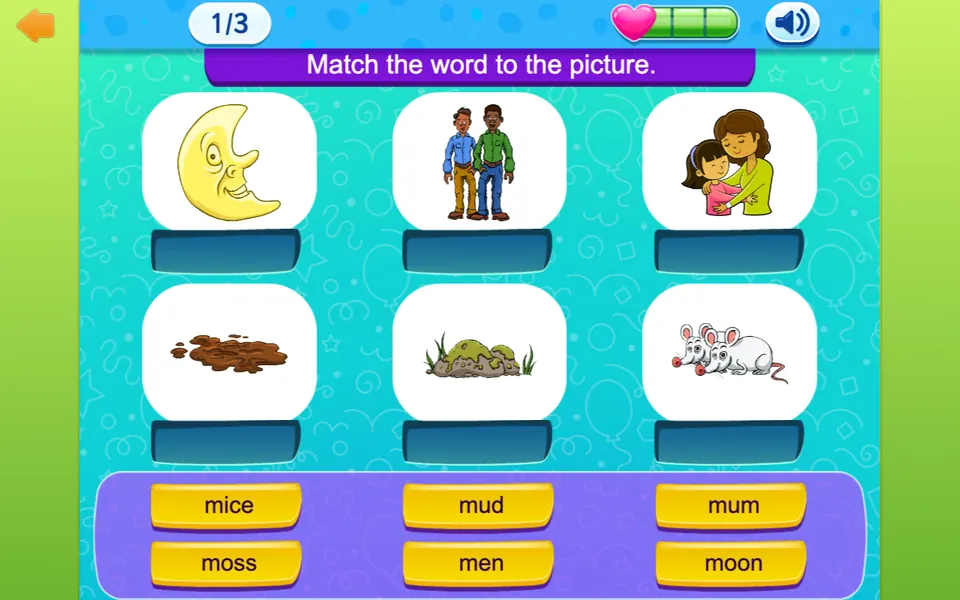
Screenshot of Monster Phonics, taken 19 October 2026.
Three things to watch for
American-English sites
Some popular phonics sites are American. Starfall, for example, is run by a US non-profit foundation and is written for US schools, with US grade names such as "K-5". American English says some vowel sounds differently from British English and spells some words differently, so for a child at a British-curriculum school an American site is not the closest match. Jolly Phonics' songs come in British and American English versions; its own advice is to "Match the home version to the version used at school."
Pure sounds
Listen to how a site says each sound: "mmm", not "muh"; "sss", not "suh". England's reading framework tells teachers to "avoid adding schwa" (the extra "uh"), because it is easier to blend /s/ /p/ /or/ /t/ than /suh/ /puh/ /or/ /tuh/ to read "sport". Programmes say the same to parents: Oxford Owl's Read Write Inc. page says "We say 'mmmm' not 'muh'". If a site adds the "uh", your child may copy it.
A website does not replace the reading book
The reading framework says that "books sent home for their children to read should match the GPCs they can already decode". GPCs are the letter–sound pairs your child has been taught. The book that comes home from school should be chosen to match exactly those. A website is extra practice; keep reading the school book every day.
One more name you will see: "Letters and Sounds". This was a framework the UK government published in 2007. It was removed from England's validated list in 2021, but many sites, PhonicsPlay among them, still arrange their games by its phases. Several newer programmes keep the words in their names (Little Wandle Letters and Sounds Revised, Essential Letters and Sounds), so check which one your school means.
How this was made
Written with AI assistance. Every site was checked by hand on 19 October 2026, from Dubai, in a computer browser and a phone-sized browser window, with the same seven questions: which programme it matches, what is free without an account, what the site says about its sounds, whether it works in a phone browser, what adverts or sales prompts appear, whether it needs an account to start, and who publishes it. Screenshots were taken that day and show the sites as they were. Reviewed by the Academic Head at GetYourTutors. No site paid to be included, and none of the links are affiliate links.
Each site's own pages, as linked above, checked on 19 October 2026.
Key Takeaway
Ask your child's teacher which phonics programme the class uses, then use that programme's own free parent pages. Sites that work with any programme are useful extra practice, but listen for pure sounds and keep reading the book that comes home from school every day.
Questions About Primary English
Frequently asked questions related to this article.
Can I use a phonics website from a different programme?
You can, but for a child who is just starting, use the one that matches school. If your school's programme has nothing free for parents, a site that says it works with any programme is the next best choice; check that its sounds match the ones your child hears in class.
My child's school is not in England. Does England's list apply?
No. It lists the programmes validated for schools in England. Schools elsewhere, including British-curriculum and IB schools in the UAE, choose their own approach, so ask your child's teacher which programme the class uses.
Do we need an app?
No. Every programme in our first table has free parent pages that open in a web browser, with no account. Some extras, such as Teach Your Monster to Read on phones and tablets, are paid apps.